With the notification of the Digital Personal Data Protection (DPDP) Act, the landscape for handling personal data in India has shifted from optional “best practices” to a stringent legal mandate. For C-suite executives and IT architects, the primary focus has moved toward one critical asset: Personally Identifiable Information (PII).
Protecting PII is no longer just about preventing a breach; it is about rethinking the entire data lifecycle to align with specific regulatory “Rules.”
The Evolution of PII Security: Beyond Perimeter Defense
Historically, enterprises focused on “locking the front door” with firewalls. However, under DPDPA, the “Notice” (Rule 3) and “Consent” (Rule 4) requirements mean that data must be tracked and managed with surgical precision. If PII is scattered across legacy databases, spreadsheets, and cloud storage, achieving “Data Erasure” (Rule 8) or providing a “Continuous Audit Trail” (Rule 13) becomes an operational nightmare.
The challenge lies in the Data Paradox: You need to use PII to run your business, but the more you move or decrypt that data, the higher your compliance risk.
Decoding the Technical Mandates: Rule 6
Rule 6(1)(a) and Rule 6(1)(g) of the DPDPA Rules highlight the need for “technical and organisational measures.” In practical enterprise terms, this translates to three core pillars:
- Searchable Encryption: The ability to query and analyze data without ever revealing the raw PII. This eliminates the “decryption window” where most data breaches occur.
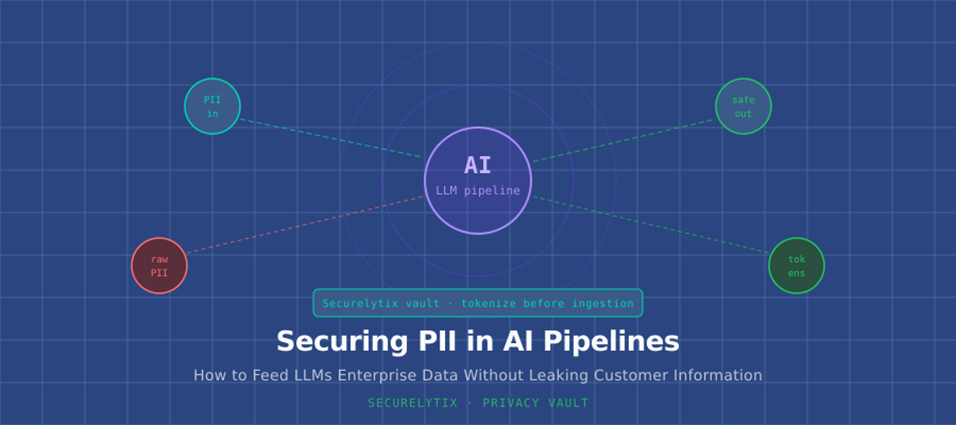
- Polymorphic Tokenization: Replacing sensitive fields (like Aadhaar numbers or PAN cards) with format-preserving tokens. This allows business applications to function normally while the actual PII remains isolated in a hardened environment.
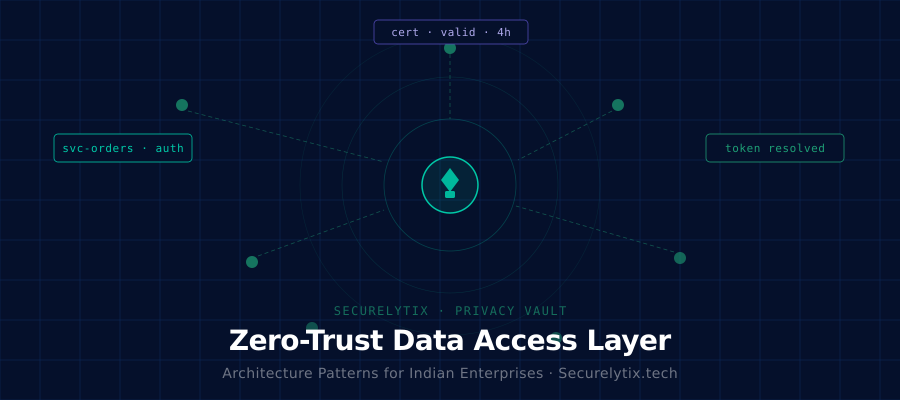
- Zero-Exposure Architecture: A design philosophy where no single administrator or application has “all-access” visibility. Data is only revealed on a strictly need-to-know basis, logged cryptographically for auditability.
Moving from Compliance to Resilience
Many organizations are realizing that “bolting on” security to existing databases is insufficient. A PII Data Vault architecture has emerged as the gold standard for regulated industries. By centralizing sensitive data into a purpose-built vault, enterprises can:
- Reduce Audit Scope: Only the vault needs to be strictly audited for DPDPA compliance, rather than the entire enterprise network.
- Simplify Data Rights: When a user withdraws consent, deleting or masking their PII in a central vault automatically updates all downstream systems.
- Prevent Ransomware Impact: Since the primary database only contains “tokens” or encrypted strings, a breach of the main server yields no usable information to attackers.
Moving from Compliance to Resilience
Many organizations are realizing that “bolting on” security to existing databases is insufficient. A PII Data Vault architecture has emerged as the gold standard for regulated industries. By centralizing sensitive data into a purpose-built vault, enterprises can:
- Reduce Audit Scope: Only the vault needs to be strictly audited for DPDPA compliance, rather than the entire enterprise network.
- Simplify Data Rights: When a user withdraws consent, deleting or masking their PII in a central vault automatically updates all downstream systems.
- Prevent Ransomware Impact: Since the primary database only contains “tokens” or encrypted strings, a breach of the main server yields no usable information to attackers.
Building the Future of Privacy with Securelytix
Navigating the complexities of Rule 6 and Rule 13 requires more than just policy, it requires specialized infrastructure. Securelytix provides an enterprise-grade PII Data Vault designed specifically for the Indian regulatory environment. By implementing advanced polymorphic tokenization and searchable encryption, we help organizations achieve a “Zero-Exposure” state, ensuring that your PII remains protected, searchable, and fully compliant with DPDPA without disrupting your business workflows.
Get in touch with our Team Securelytix right away. Thanks.
#DPDPA #DPDP #DataPrivacy #DataProtection #PIISecurity #DataFiduciary #Compliance #EnterpriseSecurity #CyberSecurity #DataGovernance #PrivacyByDesign #DataSecurity #DataVault #Tokenization #Encryption #DigitalTrust #ZeroExposure #Securelytix #DPDP India